
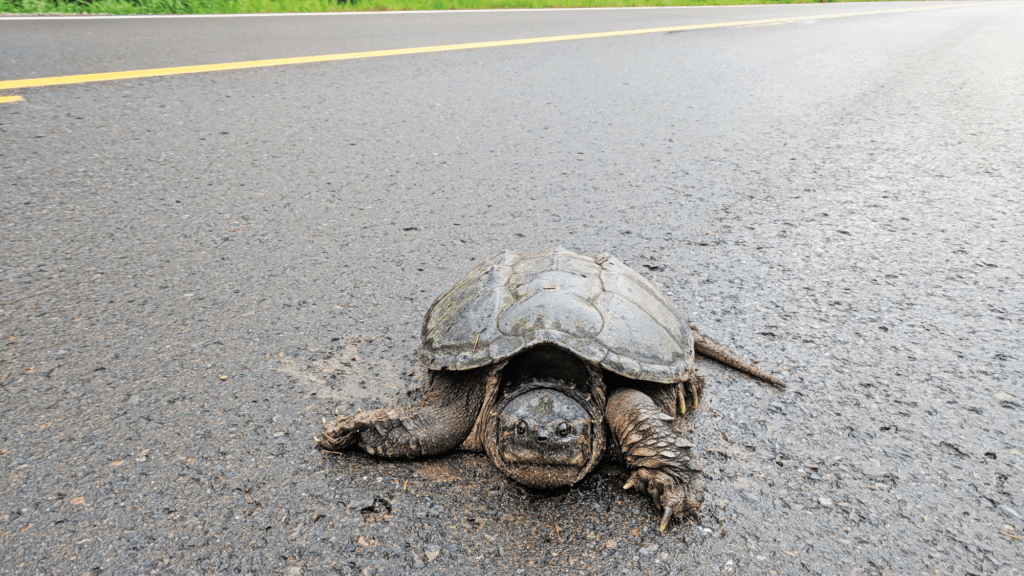
This time of year, new flowers and animals are everywhere. Baby birds and squirrels pop up in nests, while opossums and bunnies roam as the weather warms up. Not exactly known for their speed, turtles are also waking up from brumation—aka reptile hibernation.
Busy roads can be particularly dangerous for turtles, even with the protection from their hard shells. Every squished turtle is another that won’t help create the next generation, which is not welcome news for many already endangered turtle species. Out of 356 known turtle species, the International Union for Conservation of Nature (IUCN) lists 161 of them as threatened.
If you spot a turtle trying to cross a road, it is important to follow some simple rules.
Make sure that you are in a safe place to stop. You won’t be able to help a turtle if you get hurt. If driving, put on your hazard lights and slowly pull over onto the shoulder.
Assess the situation. It might be best to just stand guard as the turtle crosses on its own. If the turtle is not moving away from danger, pick it up and move it across the street in the direction that it was already going. Turtles know where they want to go to nest, feed, and reproduce, so putting them in the direction they are heading will help them get there faster.
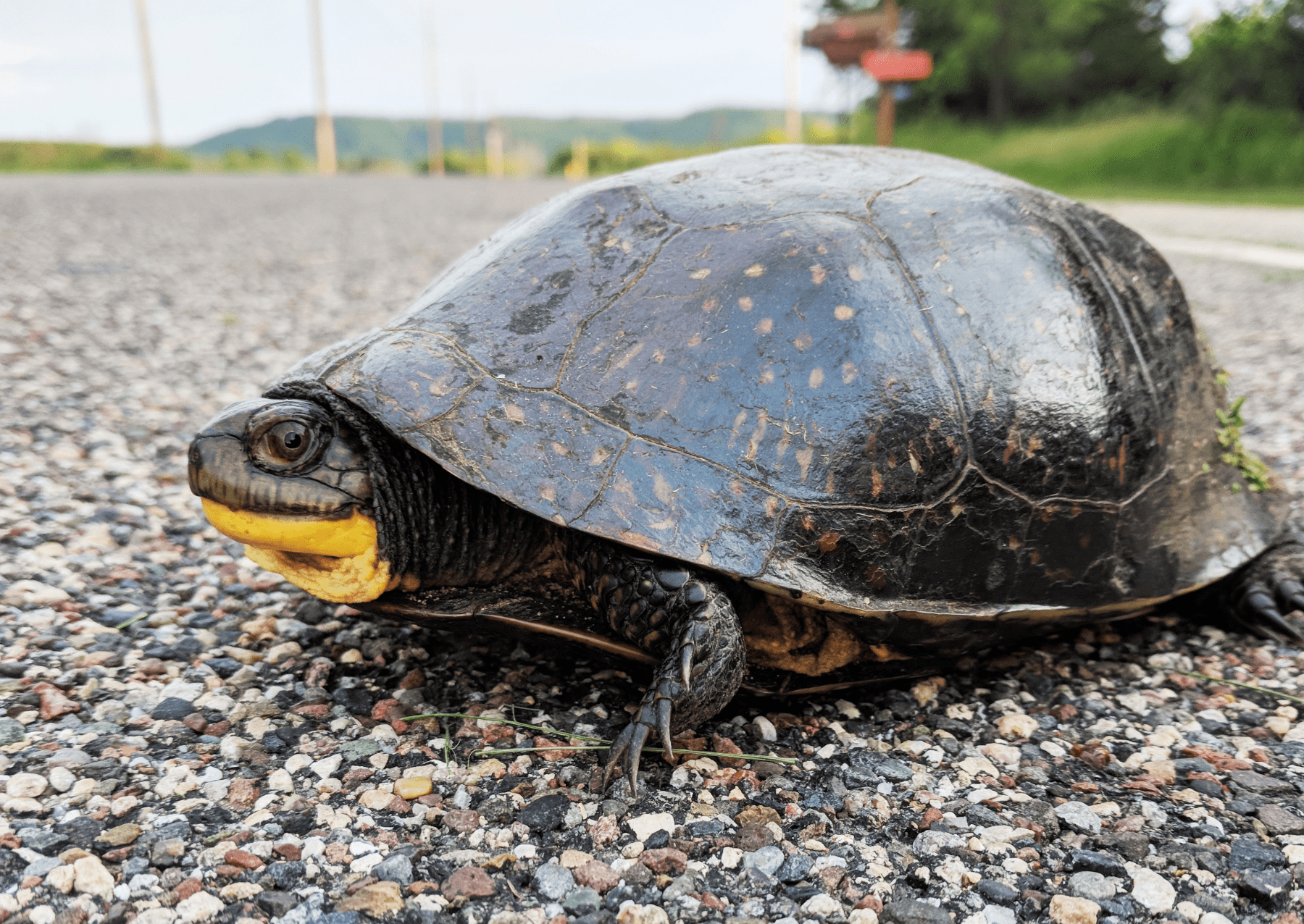
Never pick up a turtle by its tail! Instead, gently place your hands on both sides of the shell as if you are holding a hamburger to carry it. If you do not want to carry the turtle, you can put it on a car mat and carry it across the road that way.
If you encounter a snapping turtle, be particularly careful. The United States Fish & Wildlife Service (FWS) describes them as having “very long necks and a very short temper.” Keep your hands as close to their backside as possible. Snapping turtles are generally more aggressive in how they defend themselves compared to other turtle species. For example, box turtles are more likely to pull themselves into their shells during a rescue. And remember, an aggressive turtle is simply trying to stay alive or to protect their eggs.
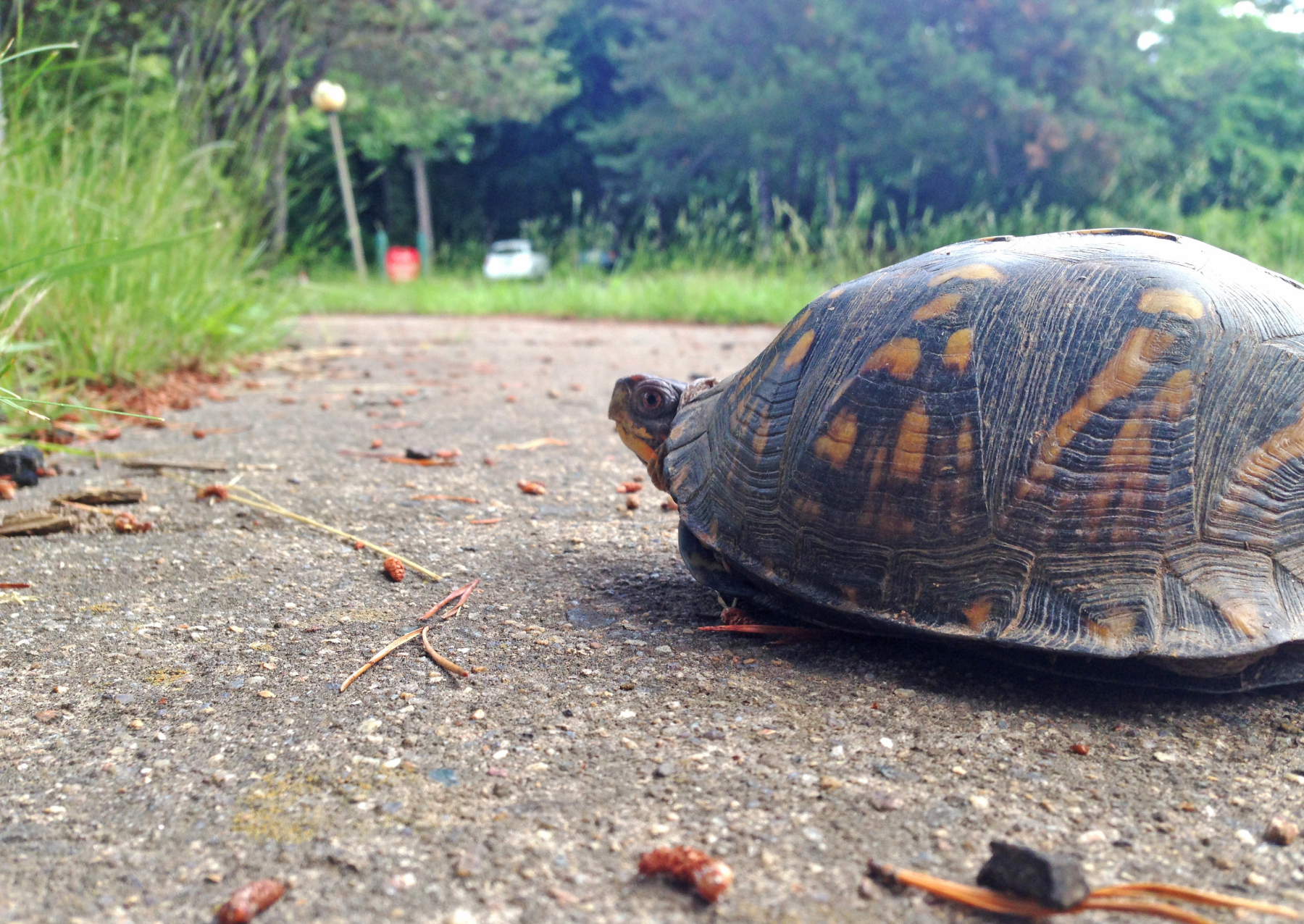
Place the turtle on a low spot in the ground, since high impact falls from a tall rock or building can injure them.
After safely moving the turtle, it can also help to take a picture of the turtle and report it to your local fish and wildlife department. This can help scientists assess local populations.
If you find an injured turtle, safely contain it in a box, log where you found it, and call your local wildlife rehabilitation center for instructions. Importantly, do not try to fix the injuries yourself! Keep it contained and away from danger until rehabilitators can assess the situation. And please don’t keep injured turtles or the healthy ones as pets. Uninjured turtles are best left alone and in the wild.
The FWS also encourages people to learn more about turtles in your area and get involved in road planning decisions that could impact their welfare.
The post How to help a turtle cross the road appeared first on Popular Science.