
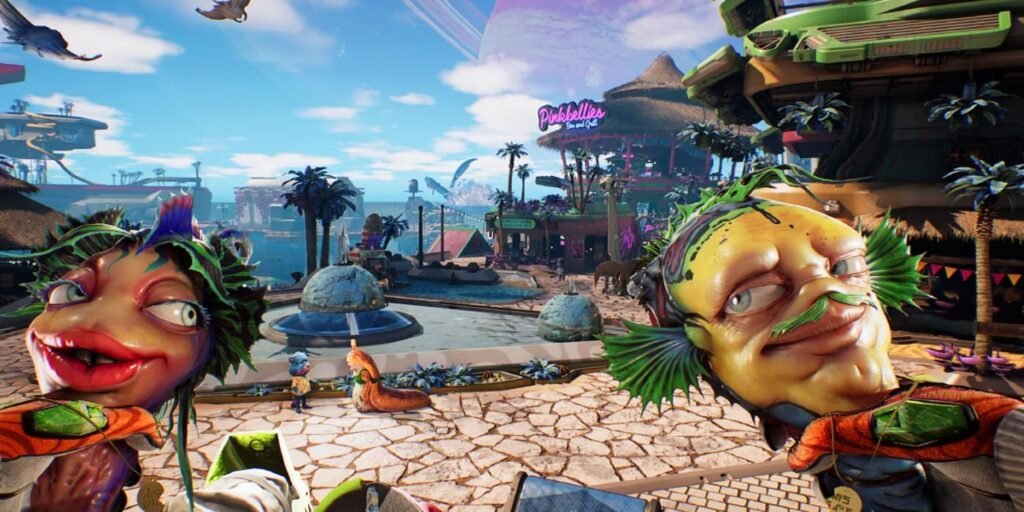
Strange anthropomorphized guns, vibrant alien worlds, gunplay while skateboarding Tony Hawk-style, colorful aliens with funny-sounding names, and “witty-meets-goofy” Rick and Morty-tinged humor — these are just some of the chaotic elements you’ll absorb in this evolutionary sequel to Squanch Games’ High on Life. While the first game amused many with its comedic absurdity, largely carried by Justin Roiland (whose absence from the game is noticeable), this one dials back some of the more fiery gags in favor of a bit more depth and a few new cool features. My feelings on High on Life 2 are as mixed and varied as the slew of talking guns obtained in this wild 14-20 hour ride. But aside from a few technically spotty areas, some ambiguous, frustrating puzzles, and the game’s more “diet High on Life” tier humor, I enjoyed much of my time with this trippy action-shooter-puzzler, more so than the debut three years back.
While the premise and gameplay can translate smoothly enough to newcomers, High on Life 2 draws quite a bit from its predecessor from the outset concerning lore and gameplay mechanics. Events take place a few years after the conclusion of High on Life, in which humanity has been saved from alien drug cartels, and our hero and his now resistance-fighter sister have become wanted outlaws. The reason? They and their band of extra-terrestrial pals strive to save their kin from being turned into alien-consumable drugs by the “legitimate” face of the drug criminals/oppressors, under the name Rhea Pharmaceuticals. It’s a pretty funny premise on the whole, and while many gags tend to fall flat on a micro level, there’s a mostly well-constructed and witty narrative that keeps players coming back to see just how this “out there” plot can possibly end. This is in contrast with the first game, which lost some steam a bit midway through.
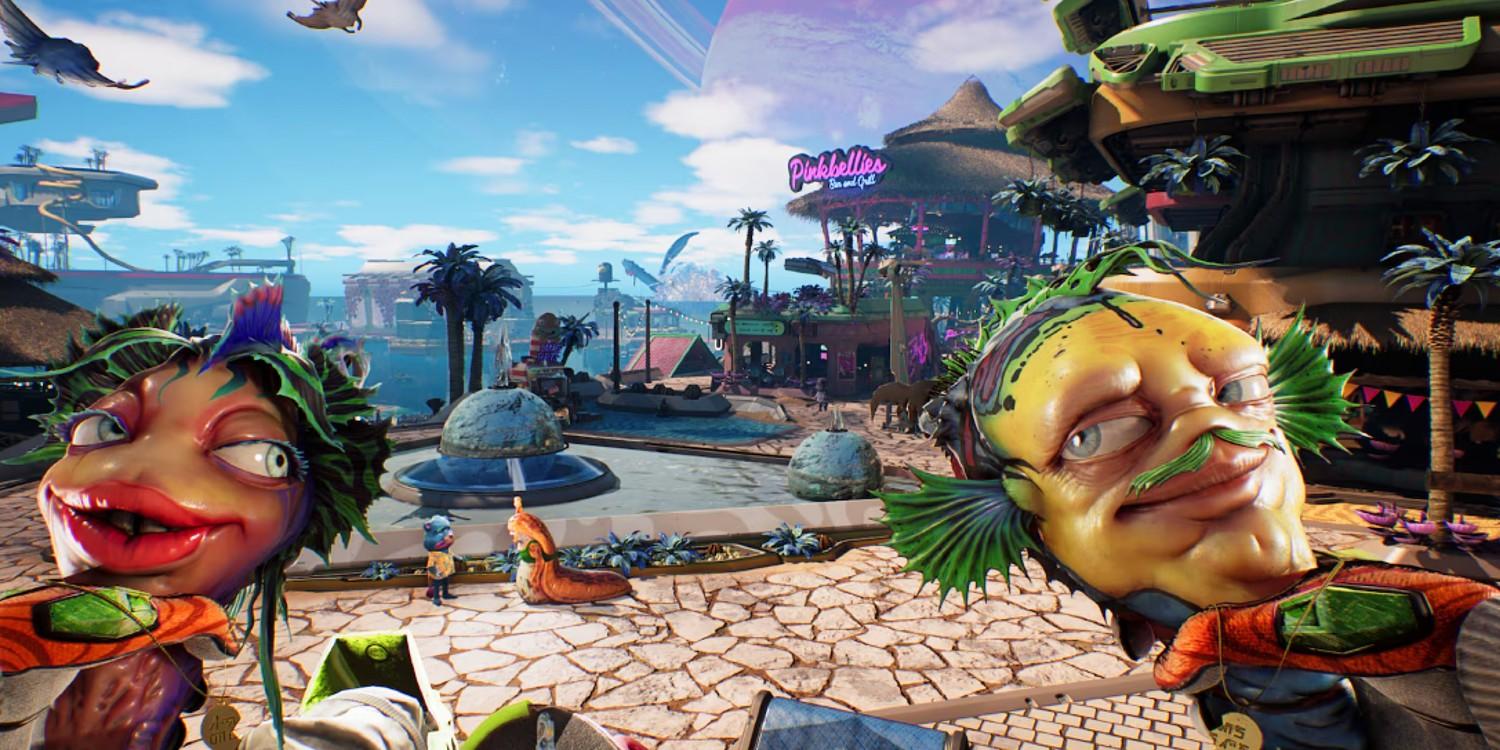
I did appreciate some cultural references and themes, the latter of which has an “early 90s-meets-colorful sci-fi” vibe — along with the capitalistic and sociopolitical satire, and plenty of gaming spoofs that reminded me of the South Park RPGs. From a cheeky Super Mario 64 painting portal reference, to the frantic online arena shooter-on-steroids scene (where an intense skirmish shifts to a rough boss fight), these bits round out the type of humor gamers and geeks should appreciate. While it helps to be a Rick & Morty fan as well, like yours truly (of the early stuff anyway), it’s really not necessary.
You even get treated to a handful of running gags/homages featuring things like the obscure Bible Games and Super Noah’s Ark on NES, which Angry Video Game Nerd fans should get a kick out of. A select few obscure retro games, including the ones just mentioned, can be played via cart collectibles that are inserted into arcades hidden about the locales. Players can even visit a theater in the main city hub and watch a handful of campy B-movies. My favorite was Spookies, whose theater includes a trio of aliens voiced by the charismatic talent of one of my favorite YouTube channels, Red Letter Media. Needless to say, I was happy to see those cameos return from the first game. Being a fan of both the Mystery Science Theater 3000 riffing they lean into and the RLM crew themselves, I, of course, had to watch the whole show. To be honest, that number proved funnier to me than most of the game it hides in, but this may partly come from my personal bias of enjoying awful movie “riffing” bits.
But if anything, it’s these sorts of cheeky cultural easter eggs that gave me more yuks than much of the vulgar dialogue spouted from the zany characters and guns. Much of the wacky banter came across as Squanch Games trying too hard to make me chuckle, a la Borderlands 3. Thankfully, you can dial back the gun chatter, which I simply had to do to avoid stimulation overload. There tends to be enough dialogue as is, much of which isn’t terribly funny, compelling, or endearing. A segment that sticks out here is a “murder mystery gone wrong” mission. The nearly half-hour scene had me caring far more about rushing to the next assassination mission or swinging by headquarters to stock up on upgrades, rather than whoever killed a particular rich Circuit Arcadia elite on a cruise ship.
In addition to a more compelling narrative overall and cool bustling city setting, from which most of the main missions stem, High on Life 2 expands the scope and gameplay features somewhat from its predecessor, and things feel (relatively) more polished. Squanch Games throws in some more weapons (and weapon upgrades), features, and unlockable mechanics, which are often needed to progress further. While the mechanics can still feel a tad cheap and slippery, they’re slightly more refined than in the first game, and many aspects can be tweaked in the settings to one’s liking. As a side note: some pretty wicked motion sickness hit me during a couple of the more chaotic moments; the game’s wobbly, loose feel, and often “busy” motion may do a number on more visually/motion sensitive folks like myself. Still, I seem to be a rare case there, and after turning off motion blur and bumping up my field of vision, these issues mostly melted away. So it’s perhaps not too fair to dock the game much based on that.
One issue in which I can shift blame, however, is the fairly concerning number of bugs and technical hiccups I encountered. I had a few game crashes, lethal slides off small slippery platforms, as well as a couple of scenes that refused to advance. A few puzzles — some of which could already be convoluted and ambiguous — grew more disorienting when an action prompt I needed to proceed refused to show itself. I fumbled around for 20 minutes with my burst-fire rifle Sheath to chain together electrical breaker charges, only to learn a prompt that was supposed to appear was absent. Restarting my game fixed the issue, but it slowed down the action even more, which didn’t do the already drawn-out puzzle any favors. While they were fairly rare, these snags were enough for me to question whether a seemingly tough-to-solve impasse was another glitch or just a brain fart. In fairness, it was usually the latter, but it was tough to gain that trust back following the early-game snafu. And, mind you, this was following several patches that had already been released.
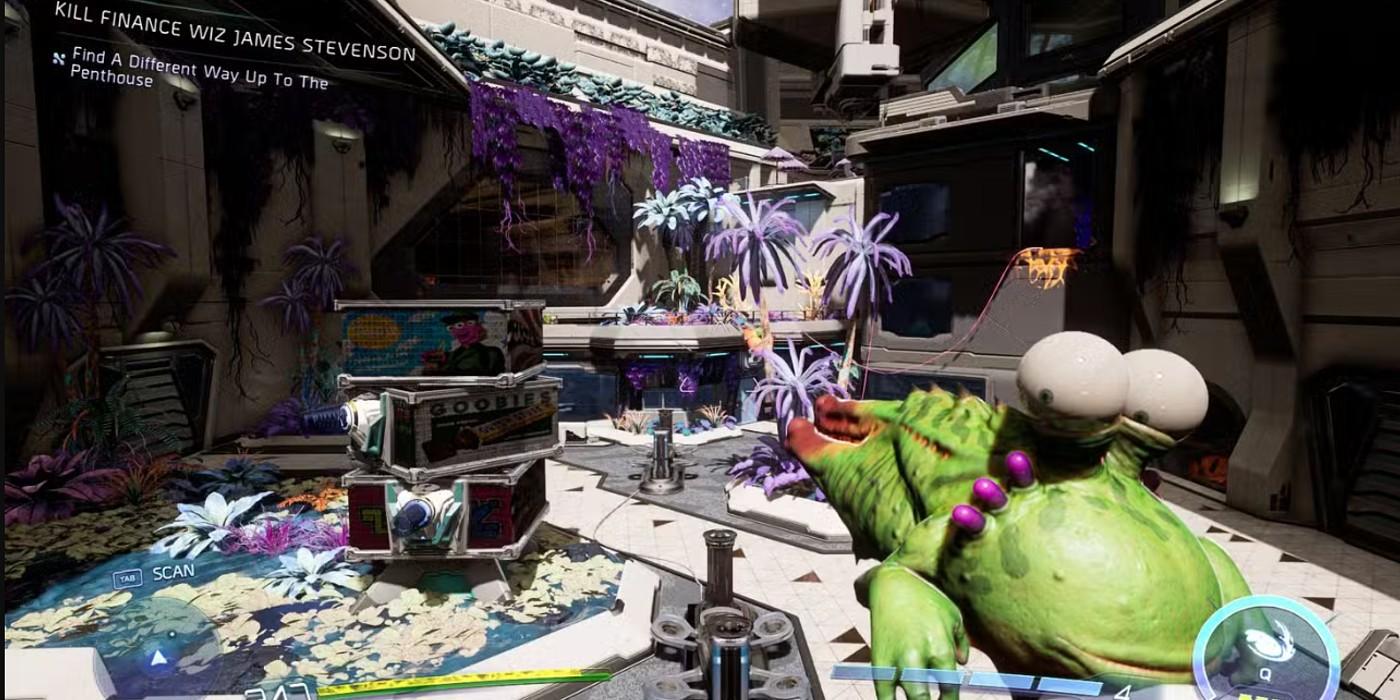
But I digress — what of the nuts and bolts gameplay and campaign experience itself? More often than not, I got a kick out of venturing back into the creative, vibrant, and often zany locales with my growing lineup of Gatlian guns (and knife). These include a few recognizable faces like the potent disc-flinging Gus, the time-slowing Sweezy, and the guidable-creature-spawning, erm… “Creature”. Though there are a handful of newbies, each of which brings its own distinct feel, (literal) character, and secondary abilities that help with crowd control and/or are outright required for progression/puzzle completion. Secondary fire/powers range from Sweezy’s slow-down orb that allows for traversal through fast objects; to Travis’ Glog Shot, which can raise certain platforms; to Sheath’s Spike, which powers up breakers. New weapon arrivals include a precision bow, the aforementioned Sheath, the amusing Travis (with a memorable voice performance by Ken Marino), and his wife Jan, whose relationship has seen some friction, as the gun is not shy about mentioning.
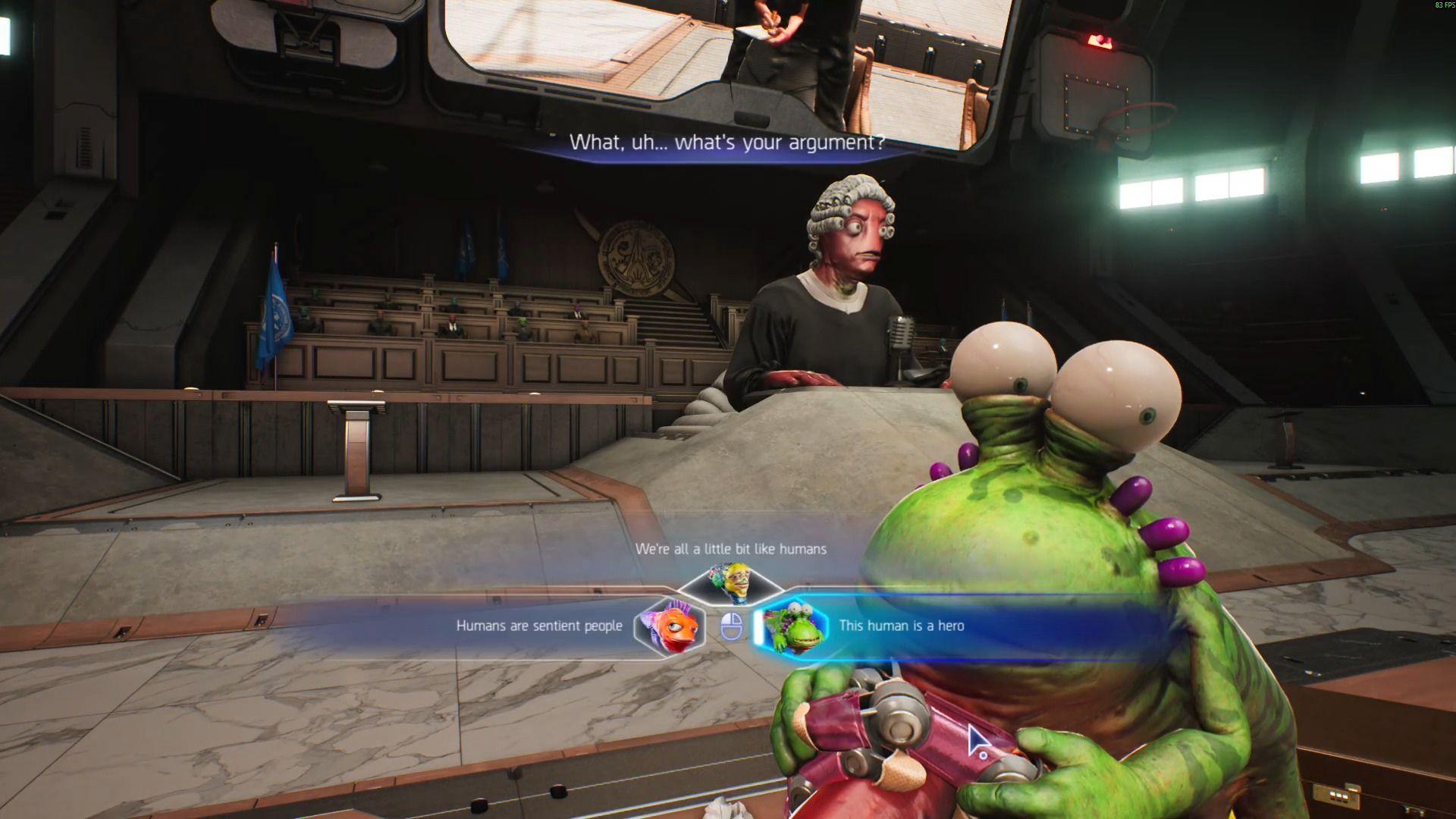
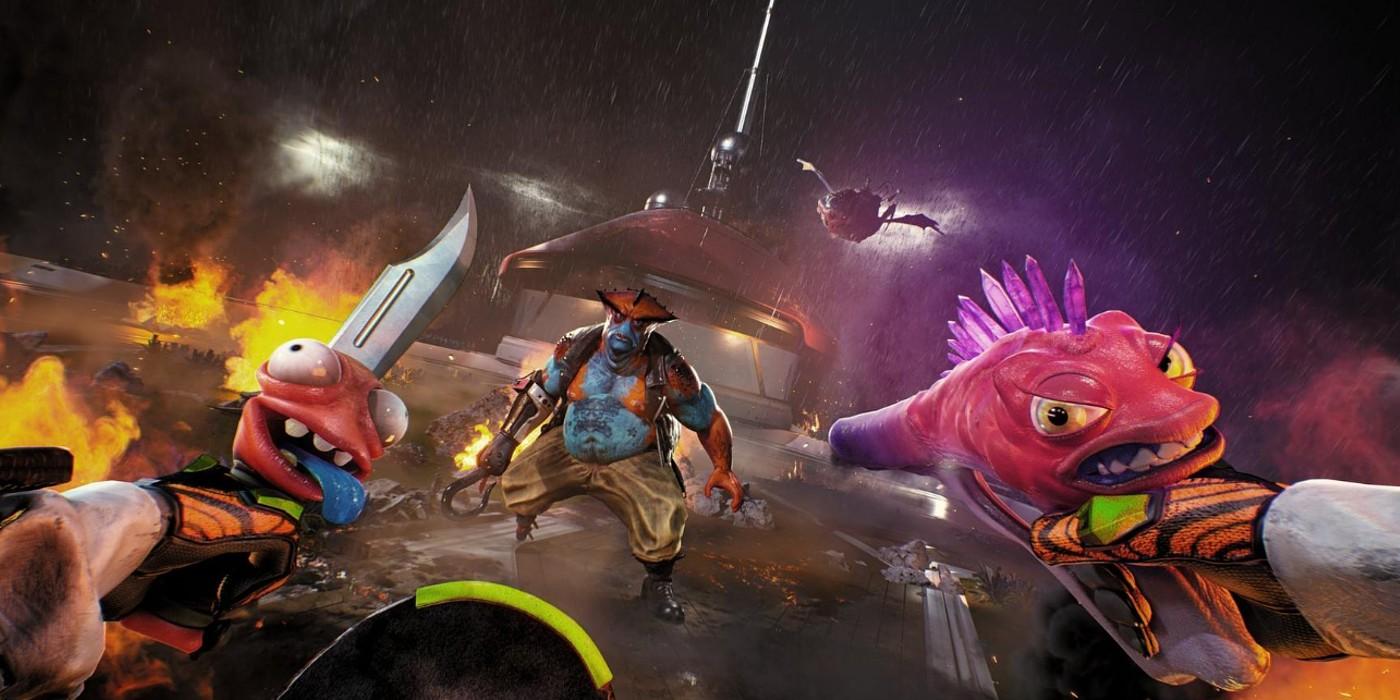
I did struggle at times concerning headshot-level precision, and often fumbled around trying to manage the best matchups for some enemies amidst the chaos. Factoring in each gun and its secondary fire could prove overwhelming when swarmed by erratic enemies. Similar to some puzzle obstacles, I often wondered just which of my wacky weapons could best deal with this particular pixelated skelly or lumbering alien brute. Still, the mechanics and aiming sharpness usually felt “good enough”, and the game’s difficulty is such that I could (playing on “normal” mode) soundly handle even large crowds shifting between my usual “go-tos”. These more reliable weapons for my money are typically the swift Sweezy, the more potent Sheath, and my trusty Knifey as my “finisher”. The few truly grueling moments included a couple of wild boss fights — including one that hacks into your menu screen — and a few instances respawning near a heated skirmish or being blindsided by maniacal foes with few visual cues.
Added to the wild nature of High on Life 2’s gunplay is the rather neat ability to use your new skateboard to glide, grind, and ramp about the game’s busy biomes, all while firing away at nearby foes and making quick escapes. You can even toss your board at targets and retrieve it fairly quickly — though this move proved more cumbersome and jarring to me than helpful or flashy. With this addition comes some more fluid, exhilarating action-leaning scenes that vibe as some strange hodgepodge of 3D Sonic, Sunset Overdrive, and early Tony Hawk. While fun, this swift pacing tends to clash with some of the aforementioned puzzles. This becomes apparent as you try to, say, spend several minutes stringing together makeshift ziplines, movable platforms, and electric currents while climbing the penthouse of a corrupt business bigwig targeted for elimination.
A large portion of objects in the game are traversable by skateboard, adding a frenetic new dynamic that amps things up quite a bit from the slower pacing of the first game. As alluded to, the mechanics could be more solid, and action prompts of nearby grindable rails or platforms aren’t always easy to spot in the chaos — so I didn’t get as many cool and stylish James Bond action hero moments as I’d like. Rather, I’d glide and grind around a bit, stumble and miss a platform, and scramble to the nearest obstruction to finish off an alien foe who chipped away at my health as I waited for it to be restored. But it’s a sweet addition when it works — or when I could actually get it to work smoothly for a prolonged time. Though overall progression and exploration are quasi-linear, there are some more open regions — holding side quests, “wanted” posters to tear down (triggering foes to fend off), and a few collectibles, which make you appreciate board traversal.
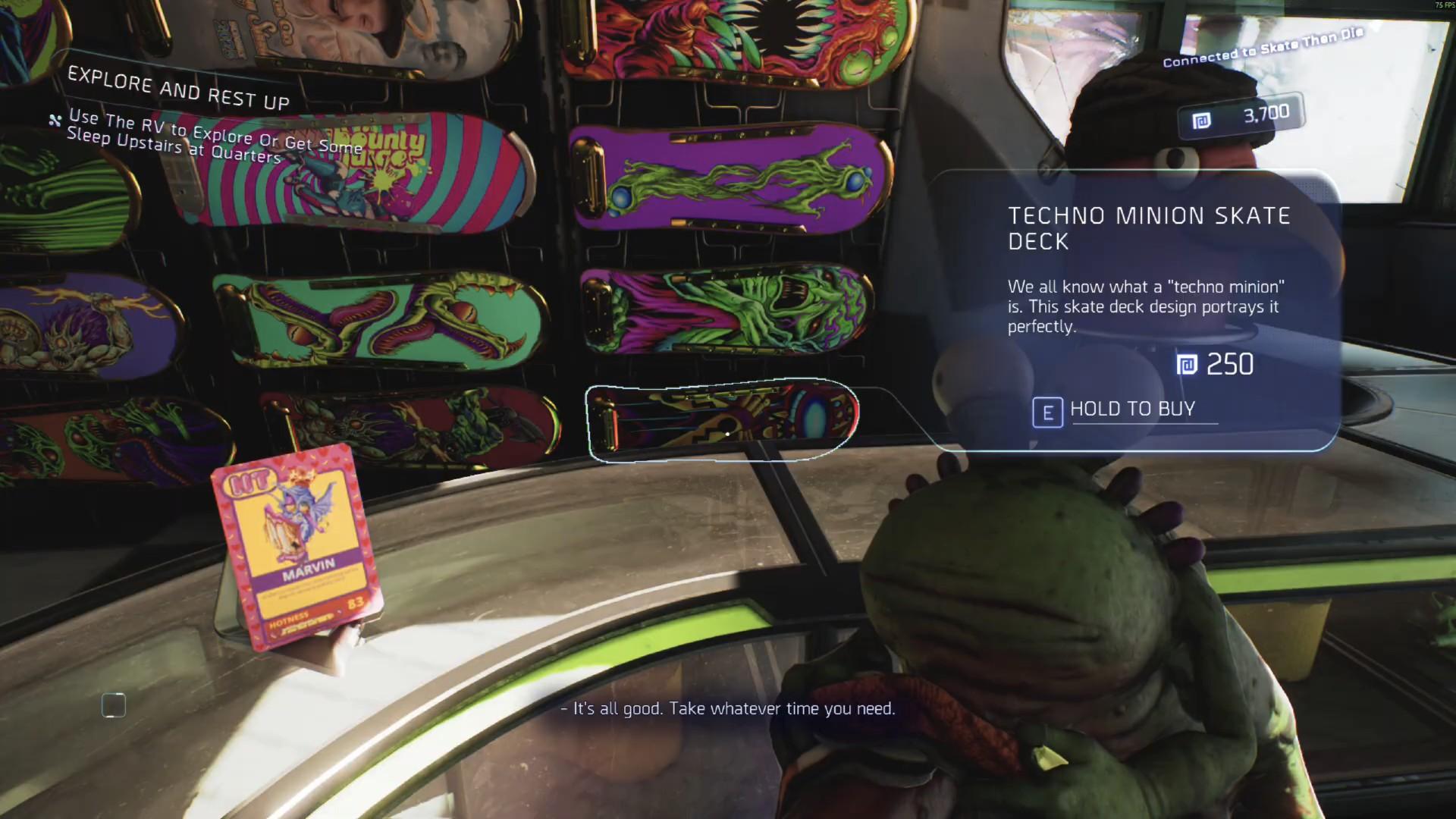
High on Life 2, while lacking some of the more outrageous humor and novelty factor of the first rendition, makes up for it in other areas — namely the skateboard inclusion, more gun varieties, and a smattering of neat easter eggs, i.e. emulated retro games and campy film screenings. Still, the hodgepodge of surprisingly involved puzzles, “extreme” game vibes via skateboarding, and off-kilter themes that include Rick & Morty humor and obscure pop-culture references gives the game a fairly limited audience, at least with regard to full enjoyment. A few glitches and technically wonky bits mar an otherwise amusing, pretty solid follow-up that’s worth a look for Game Pass owners. Yet, at full price, it’s tough to truly recommend to all but the most diehard fans of shooters, Rick & Morty, and/or retro gaming geekdom.
Full Article – https://www.vgchartz.com/article/467396/high-on-life-2-xs/